











 iOS
 Android
 Chrome
 Firefox
 Edge
Reader view
Reformat PDFs into clean, readable text. See more
The plumbing system and associated magmatic processes
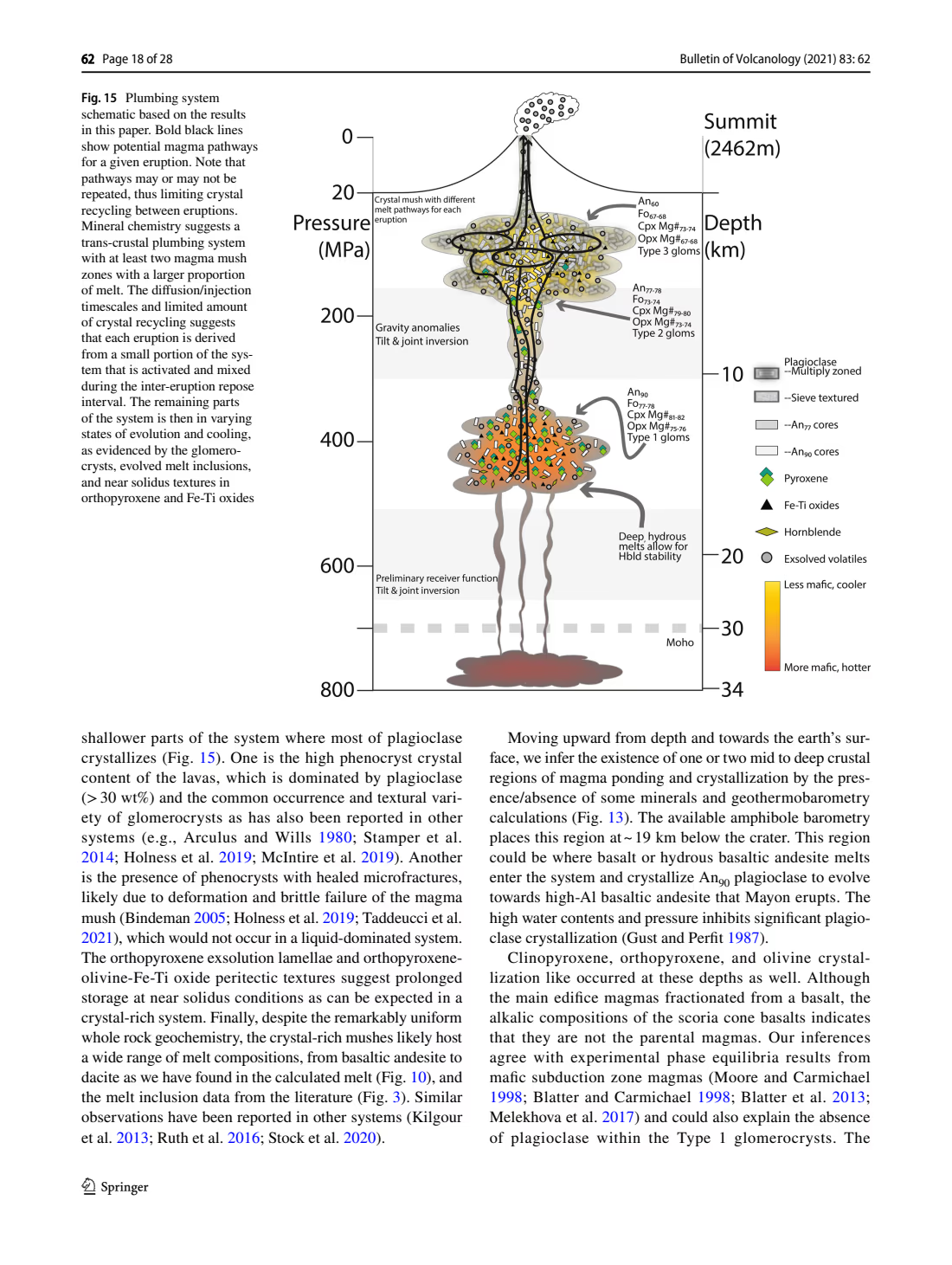
Several observations suggest that the Mayon plumbing system consists of magma mush regions, especially in the shallower parts of the system where most of plagioclase crystallizes (Fig. 15).
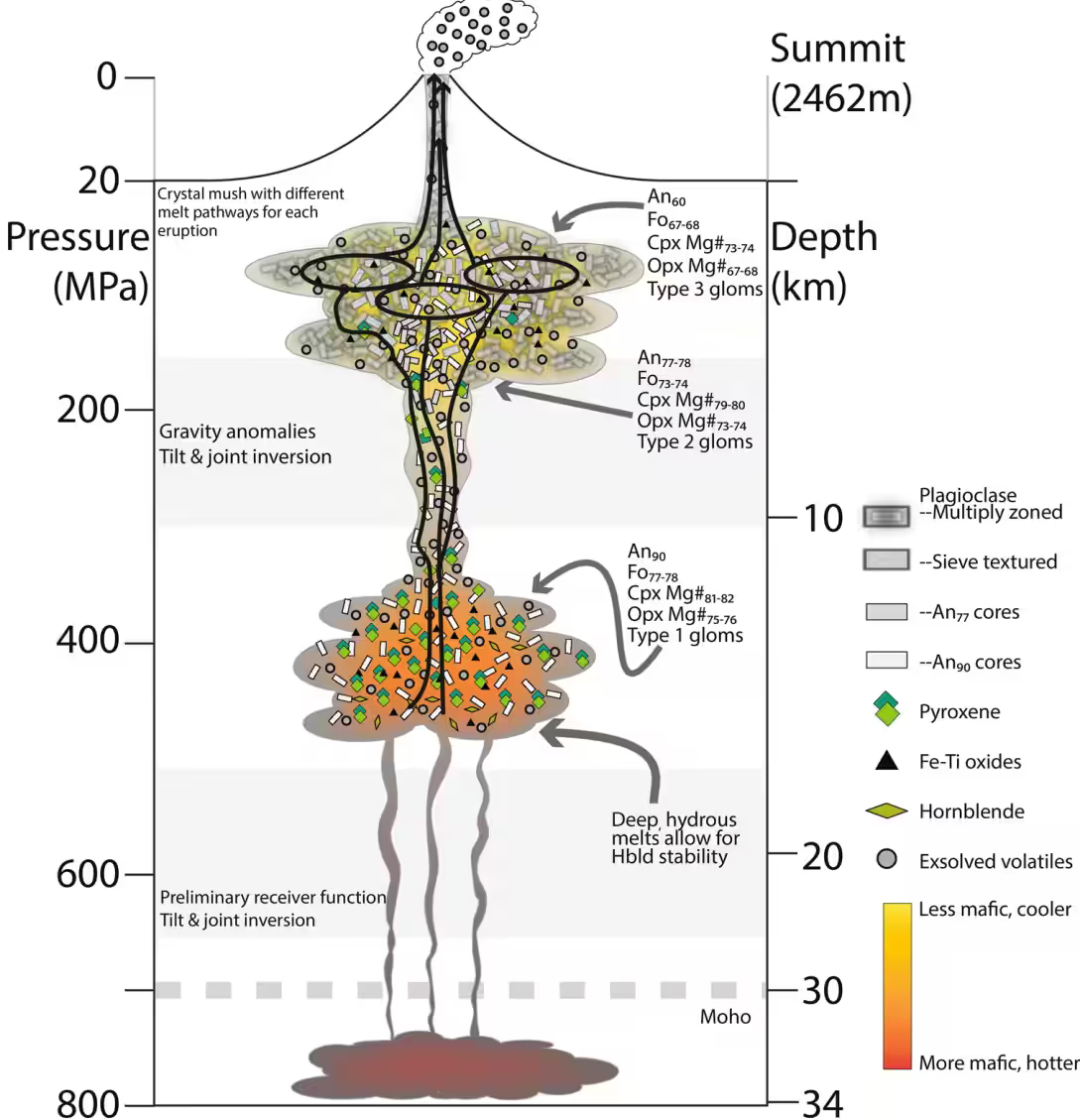
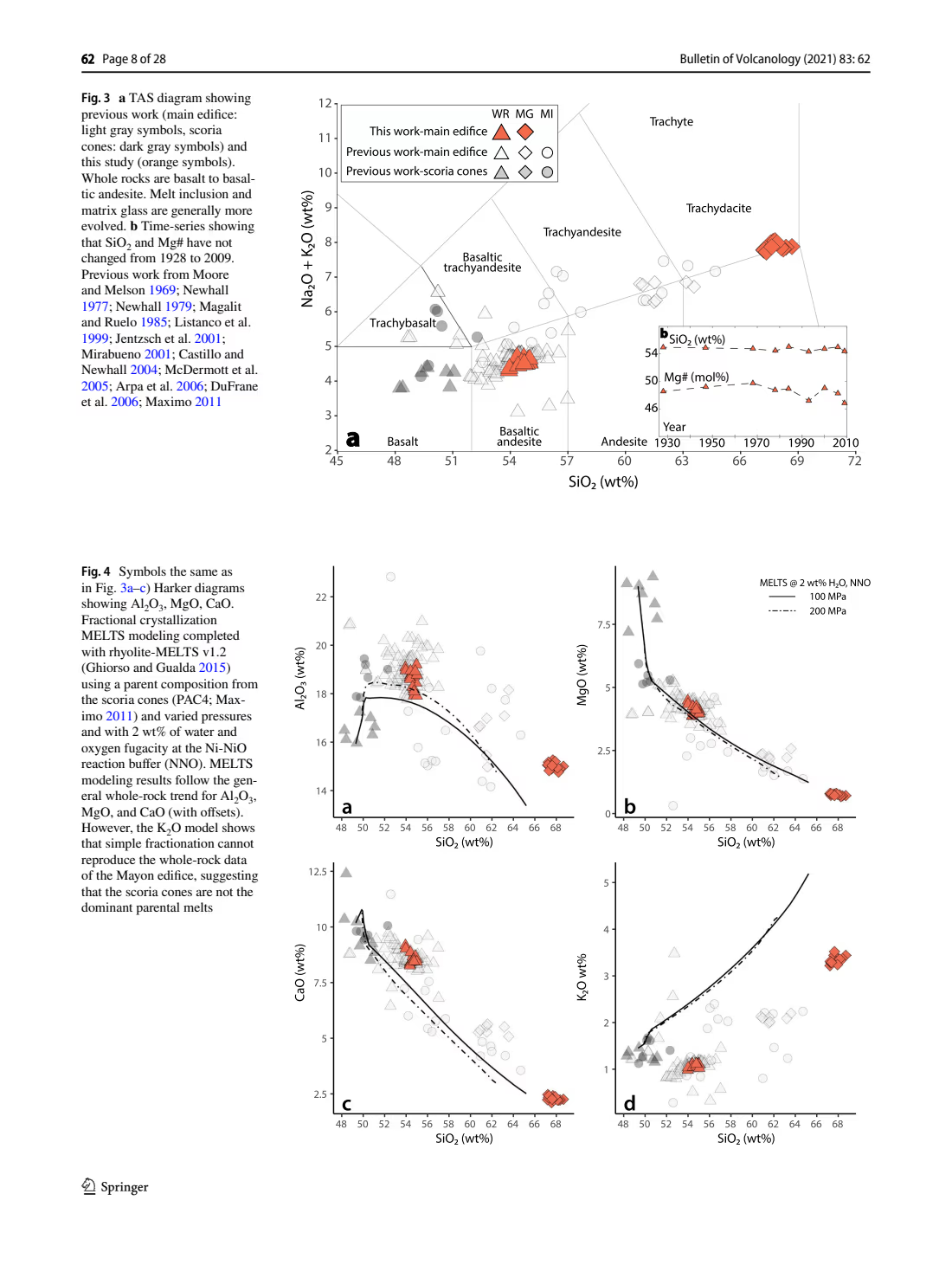
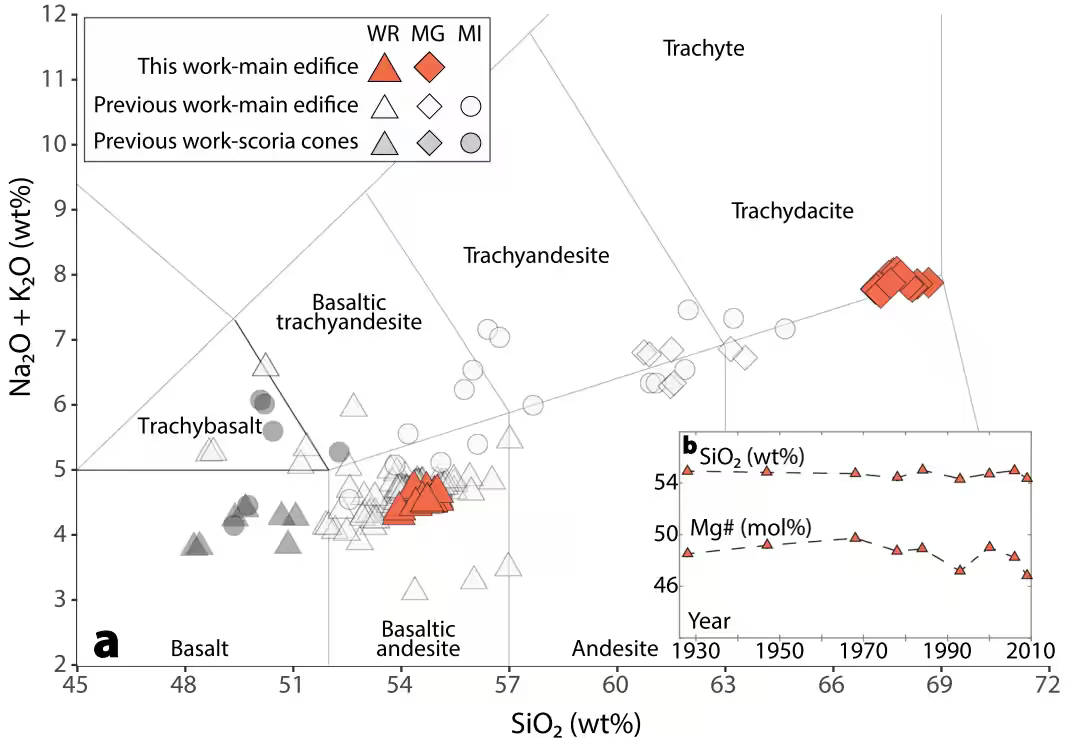
One is the high phenocryst crystal content of the lavas, which is dominated by plagioclase ( greater than 30 wt%) and the common occurrence and textural variety of glomerocrysts as has also been reported in other systems. Another is the presence of phenocrysts with healed microfractures, likely due to deformation and brittle failure of the magma mush, which would not occur in a liquid-dominated system. The orthopyroxene exsolution lamellae and orthopyroxene-olivine-Fe-Ti oxide peritectic textures suggest prolonged storage at near solidus conditions as can be expected in a crystal-rich system. Finally, despite the remarkably uniform whole rock geochemistry, the crystal-rich mushes likely host a wide range of melt compositions, from basaltic andesite to dacite as we have found in the calculated melt (Fig. 10), and the melt inclusion data from the literature (Fig. 3). Similar observations have been reported in other systems.
Timing of magma intrusions and crystal recycling
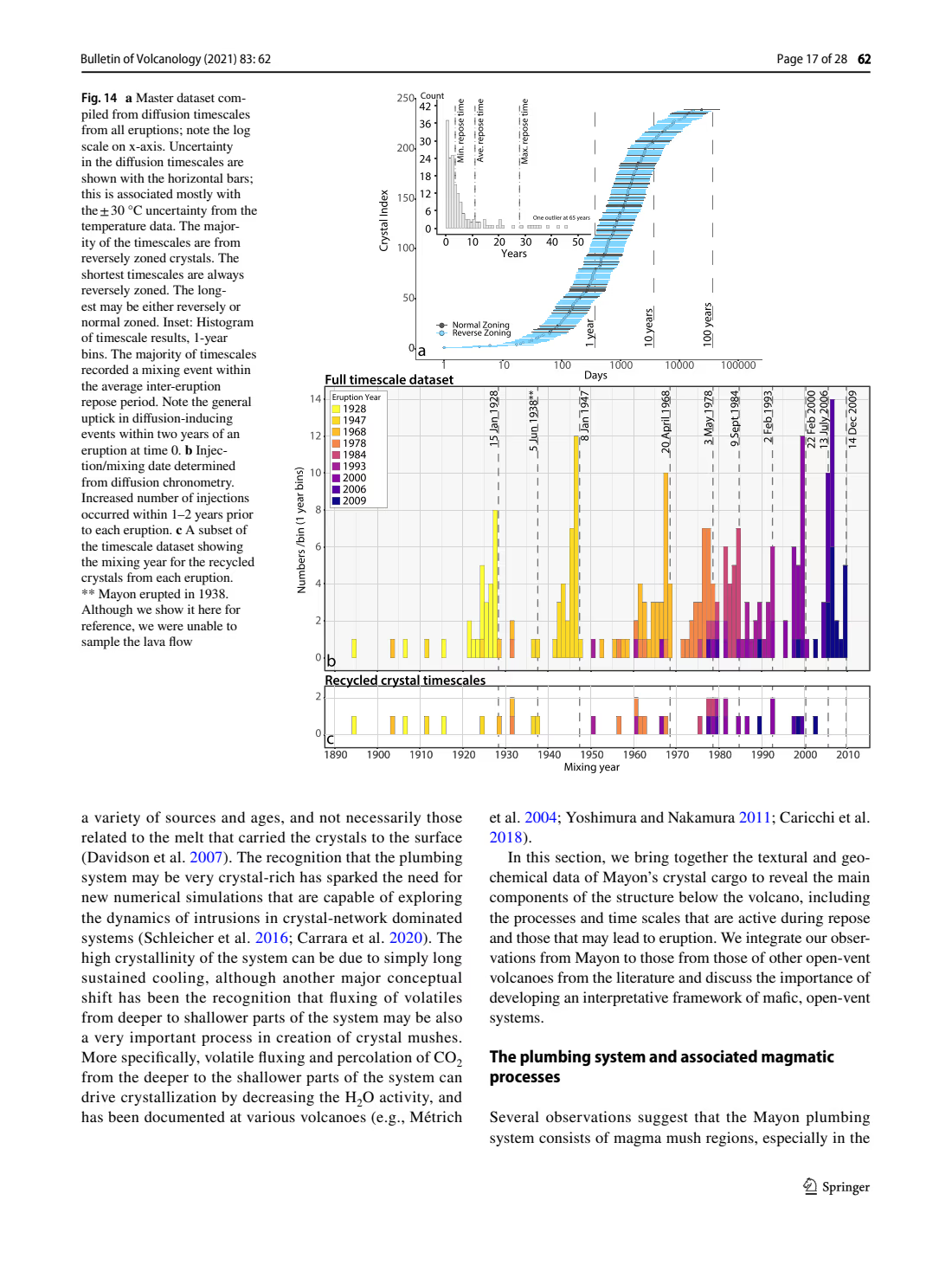
Modeling the pyroxene Fe–Mg zoning patterns using diffusion chronometry from multiple eruptions provides unique insights into the timing of sustained and/or repeated magma injection and mixing events. We found that almost 90% of the diffusion timescales show evidence for magma replenishment/mixing of less than about 11 years (Fig. 14), which is the average repose interval of Mayon. Mixing and injection generally occurred in the deeper plumbing system (~15 to 20 kilometers), based on the orthopyroxene-melt barometric results. This suggests that plumbing system is almost continuously replenished between eruptions by new melt from depths greater than 18 to 20 kilometers. Such additions of mass, heat, and fluids likely allow for the relatively narrow range of temperature and continues degassing which in turn maintains the open plumbing system. Moreover, we also found that all eruptions were preceded by increased injection frequency and/or mixing on the order of 1 to 2 years before eruption onset, which suggest that eruptions were preceded by an increased amount of melt replenishment that could have been driven by the accumulated amount of gas lost.
Recalculation of the time scales into absolute magma intrusion times shows that between 10 and 20% of the pyroxene crystals found in each eruption are recycled from previous events. For example, one crystal erupted in 2009 is inherited from processes that started in 1989 (Fig. 14b, c, see supplementary Table S.9 for exact mixing dates). Given the crystal-rich nature of the Mayon plumbing system one could expect a larger amount of recycled pyroxene crystals, although most of the crystal mush is likely made by plagioclase. There are several possible scenarios to explain the small number of crystals with diffusion time scales that are longer than the repose times. One is that older pyroxenes may be dissolved by each renewed intrusion, as orthopyroxene dissolution is relatively fast if we assume that it is mainly dependent on the Mg diffusion in the liquid as it is for olivine. This scenario would require significantly hotter mafic magma input, which is not supported by the thermometry data. Another possibility is that the relationship between the crystal-mush and the intruding melt is very heterogeneous and that each intrusion-eruption “couple” only samples a localized, small volume part of the system (Fig. 15). Recent numerical modeling simulations of melt intrusion into crystal-rich mafic mushes highlight that crystals entrained during an injection event may be redistributed to distal regions of the active crystal mush and these crystals may only be entrained during a later injection event.
Thus, the long-lived magma mush “traps” these crystals, allowing for decades of diffusion before being entrained during a later injection event and erupted. Finally, Mayon eruptions between 1928 and 2009 have been relatively small to moderate (V.E.I 2 to 3) and it is most likely that the majority of the intruded magma volume is erupted, so that only a limited number of crystals are left over in the plumbing system. This implies that the magma mush could have returned to the pre-eruptive state relatively quickly, in the few years during the repose period during which addition of C-O 2 rich fluids to the shallower parts of the system followed by vigorous degassing towards the surface promotes extensive plagioclase crystallization.