
Back to School Free Reads: Classic Literature for AP English
By Lindsey Golden · September 1, 2026
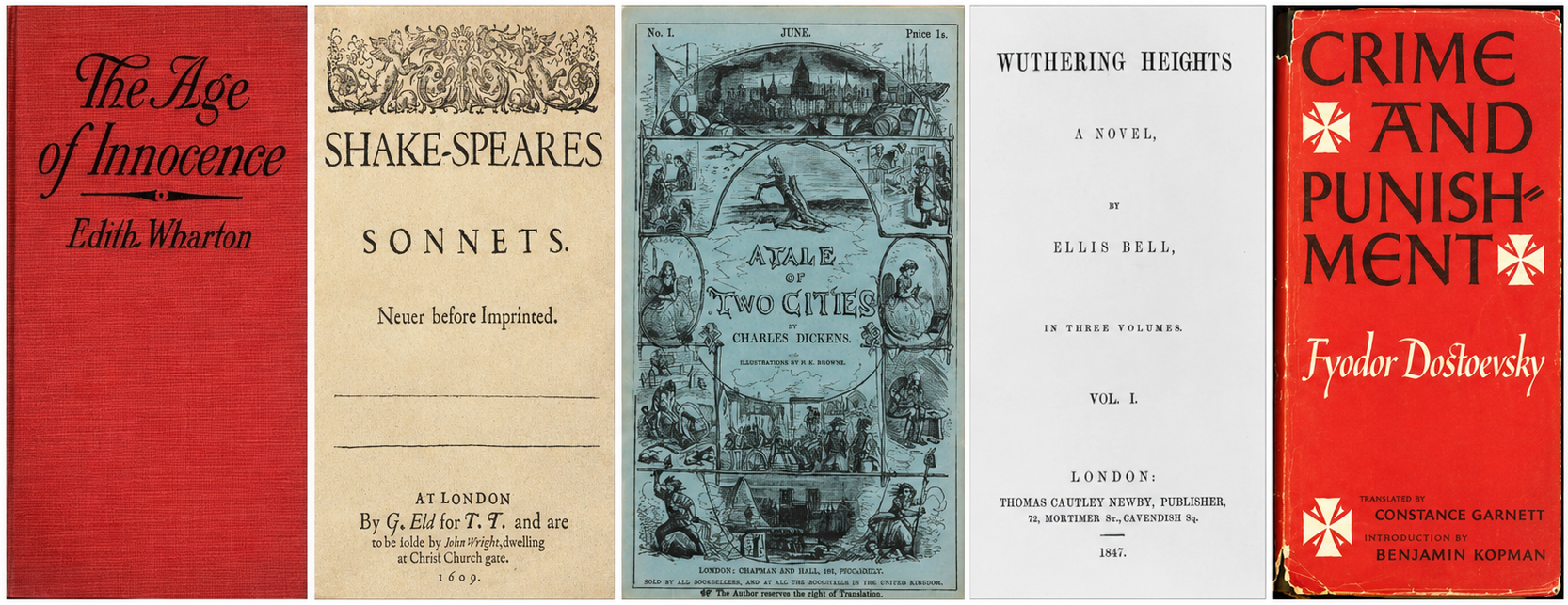
There’s no single required reading list for AP English Literature and Composition, but certain classics appear frequently in AP Literature courses and College Board materials because they reward close reading and support discussion of themes, character, structure, symbolism, rhetoric, and historical context. We’ve added five of these public-domain classics to Paper2Audio Free Reads so students can listen alongside assigned reading.
These are influential works that helped shape modern fiction and poetry, introduced characters and ideas that still echo through contemporary culture and are worth reading even if you aren't a current student. They offer a glimpse into how people in different eras thought about love, ambition, morality, society, and the human experience.
You can add these titles directly to your own library–we’ve already converted them to audio for you with Paper2Audio’s text to speech technology, so it won’t use any of your audio generation limit. Just click on any of the links below and then click “Save for later” at the top of the document to add it to your library.
We’ve included these free audiobook classics for their literary and historical value, but we also recognize that like many materials from earlier eras, these may contain outdated language, stereotypes, or social attitudes that can be hurtful or uncomfortable for modern readers.
Complete Sonnets by William Shakespeare (1609)
Shakespeare’s 154 sonnets explore universally human themes like love, beauty, desire, jealousy, and mortality. The collection includes some of the most famous poems in the English language and gives readers a concentrated look at Shakespeare’s imagery, wordplay, metaphor, structure, and argument. Because AP Literature asks students to analyze how poetic form and language create meaning, the sonnets are particularly useful for practicing close reading on a small scale.
Wuthering Heights by Emily Brontë (1847)
When the Earnshaw family takes in an orphaned boy named Heathcliff, he forms an intense bond with their daughter Catherine, but differences in class, status, and temperament complicate their relationship. As Heathcliff grows older, love, resentment, and rivalry draw the family and their neighbors, into a turbulent story that spans two generations. The novel’s layered narration, morally complicated characters, Gothic atmosphere, and blurred lines between love and obsession make it especially rich material for the kind of close interpretation expected in AP Literature. Emily Brontë wrote this story under the male pseudonym Ellis Bell to avoid having her work judged solely based on her gender.
A Tale of Two Cities by Charles Dickens (1859)
Set in London and Paris around the time of the French Revolution, the story follows several interconnected characters whose lives are transformed by political upheaval, family secrets, and the growing violence in France. Dickens combines historical drama, romance, suspense, and social commentary in a story about injustice, loyalty, sacrifice, and the possibility of redemption. Its layered plot, recurring imagery, social criticism, and use of historical setting give AP students plenty to work with when analyzing how literary techniques reinforce a novel’s larger ideas.
Crime and Punishment by Fyodor Dostoevsky (1866)
In St. Petersburg, impoverished former student becomes consumed by the idea that perhaps extraordinary people are justified in breaking moral rules. After putting that theory to a terrible test, he finds himself caught between his intellectual convictions, his conscience, and the people around him in a psychological novel about guilt, morality, isolation, and redemption. The novel’s competing philosophies, psychological depth, symbolism, and complex character motivations make it a natural fit for AP discussions about how authors develop meaning through internal conflict and moral ambiguity.
The Age of Innocence by Edith Wharton (1920)
In the tightly controlled world of 1870s New York high society, Newland Archer is preparing for a conventional marriage when the arrival of the independent Countess Ellen Olenska makes him question the life that has been planned for him. Wharton uses romance, irony, and sharp social observation to explore the tension between individual desires and the expectations of family, class, and society. For AP readers, its restrained narration and subtle use of irony offer a strong example of how an author can critique an entire social system without stating that critique directly.